When to surf in Morocco: month-by-month swell, water temperature and wetsuit guide, plus the best season for beginners and for experienced surfers.
Can You Surf All Year in Morocco?
Yes. Morocco is one of the few surf destinations where you can surf every month of the year. The Atlantic coast around Tamraght and Taghazout gets consistent swell, more than 300 days of sunshine and mild water all year round. The real question isn't if you can surf, but which season matches your level.
Short answer: beginners get the most forgiving waves from May to September. Intermediate and advanced surfers get the best, most consistent point-break swell from October to March.
Morocco Surf Season at a Glance
| Months | Waves | Water | Best for |
|---|---|---|---|
| Sep – Nov | First swells, clean and medium-sized | 20–22 °C | All levels |
| Dec – Feb | Biggest, most powerful swells | 17–19 °C | Intermediate – advanced |
| Mar – May | Consistent, medium swells | 17–19 °C | Beginner – intermediate |
| Jun – Aug | Small, gentle waves | 20–22 °C | Beginners |
September – November: The Sweet Spot
Autumn is many surfers' favourite season in Morocco. The first North Atlantic swells arrive in September and October, the point breaks start to wake up, and the summer crowds disappear. The water is still at its warmest of the year (around 20–22 °C) and the air is pleasant, typically mid-20s °C during the day.
Because the swell is building but rarely huge, autumn works for every level: beginners still have small days on the beach breaks, while intermediates get their first sessions on the famous points. Read more in our article on surfing in Morocco in October.
December – February: Peak Swell Season
Winter is the heart of the Moroccan surf season. Deep low-pressure systems in the North Atlantic send long-period north-west swells that light up Anchor Point, Killer Point and Boilers. Mornings are often glassy with offshore winds, and days are sunny and around 20 °C, although nights get cold. The water drops to about 17–19 °C, so bring or rent a 4/3 wetsuit.
This is the time for experienced surfers to chase the long rights Taghazout is famous for. Beginners can still learn in winter, but on big days lessons move to sheltered beaches, and the choice of spot matters more. See our guide to the top 10 surf spots near Taghazout and Tamraght for which wave suits which level.
March – May: Consistent and Less Crowded
Spring still gets regular swell, usually a little smaller than in mid-winter, with longer days and warming air. It's an excellent season for intermediates who want consistent, manageable waves and for beginners who want more surf days per week. Winds can pick up in the afternoon, so the best sessions are often in the morning.
June – August: Summer Learning Season
In summer the Atlantic calms down. The famous points are often flat, but the beach breaks such as Devil's Rock and Crocodiles keep producing small, friendly waves. That's perfect for surf lessons, families and first-timers. Air temperatures are higher (often in the high 20s °C), the water warms back up to around 20–22 °C and a 3/2 wetsuit is enough. The north wind tends to blow in the afternoon, so morning sessions are cleaner.
Water Temperature and Wetsuit Guide
- Winter (Dec–Feb): 17–19 °C. Wear a 4/3 wetsuit, booties optional.
- Spring (Mar–May): 17–19 °C. Wear a 4/3 or a warm 3/2.
- Summer (Jun–Aug): 20–22 °C. A 3/2 wetsuit or a shorty on warm days.
- Autumn (Sep–Nov): 20–22 °C. A 3/2 wetsuit.
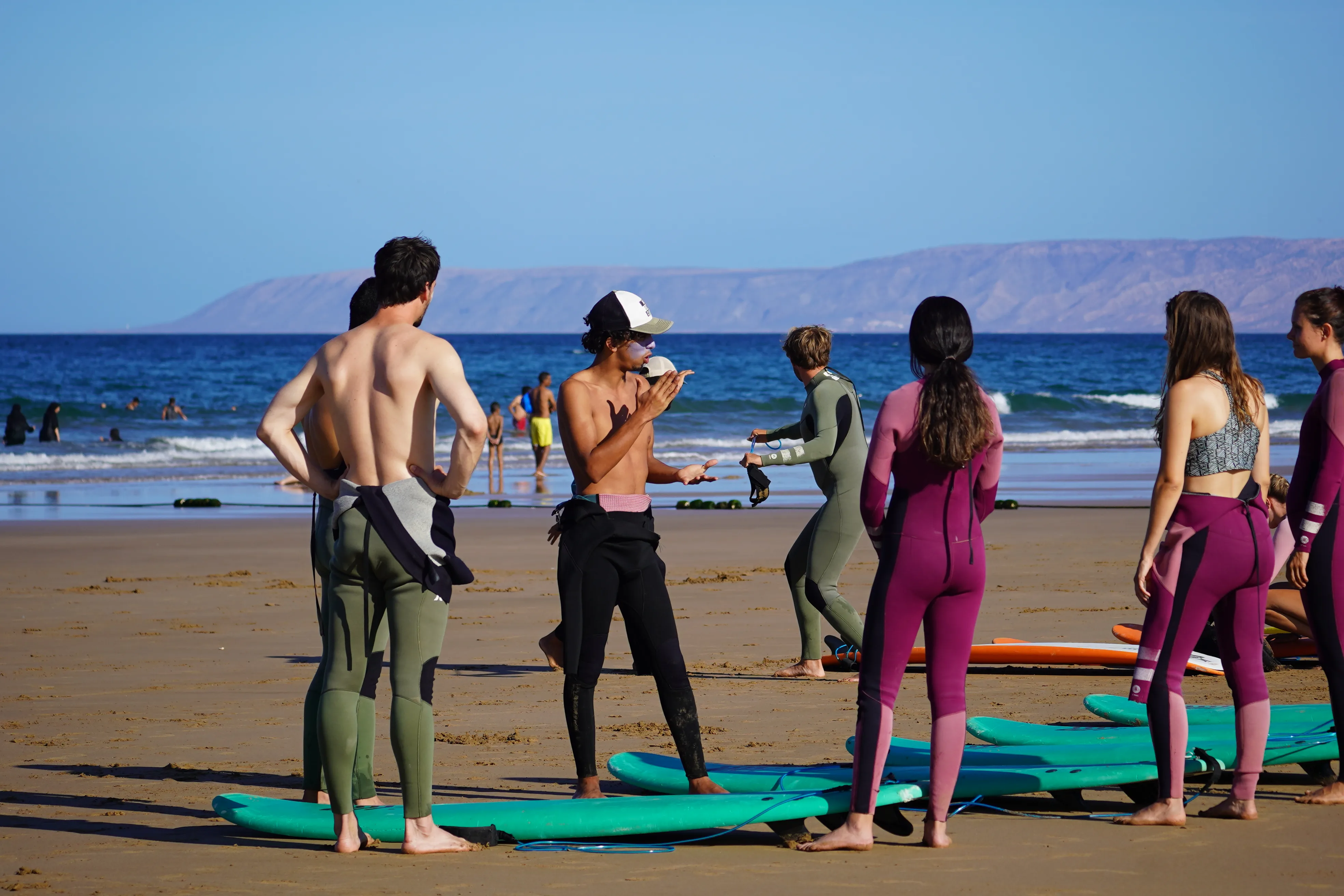
Our surf lessons always include a wetsuit and board adapted to the season and to your level.
When Should Beginners Visit?
From May to September, waves are generally smaller and more forgiving, which makes this the ideal period to learn. September and October are a great compromise: still-warm water, fewer crowds and a mix of small and medium days. Beginners can come in winter too, as long as lessons are run by coaches who know which beaches are sheltered on big days. Check our surf lessons in Tamraght.
When Should Experienced Surfers Visit?
October through March offers the strongest swells and the classic point-break conditions Morocco is known for. December to February is peak season. If you want long rides at Anchor Point or Killer Point, plan your trip in this window and consider surf guiding to be at the right spot at the right tide.
Frequently Asked Questions
What is the best month to surf in Morocco?
For experienced surfers, December to February brings the biggest and most consistent swells. For beginners, May to September offers smaller, more forgiving waves. October is a great all-round month for every level.
Is the water cold in Morocco?
The water ranges from about 17 °C in winter to 22 °C in late summer. You'll need a wetsuit all year: a 4/3 in winter and a 3/2 in summer.
Can you surf in Morocco in summer?
Yes. Summer waves are smaller, which makes it the best season for beginners and surf lessons. The beach breaks around Tamraght work almost every day.
Plan Your Surf Holiday
Whatever the season, Surf & Solace helps guests find the best daily surf conditions, with coaching, equipment and comfortable accommodation in Tamraght. Ready to go? Plan your surf trip or join a retreat combining surf and yoga.